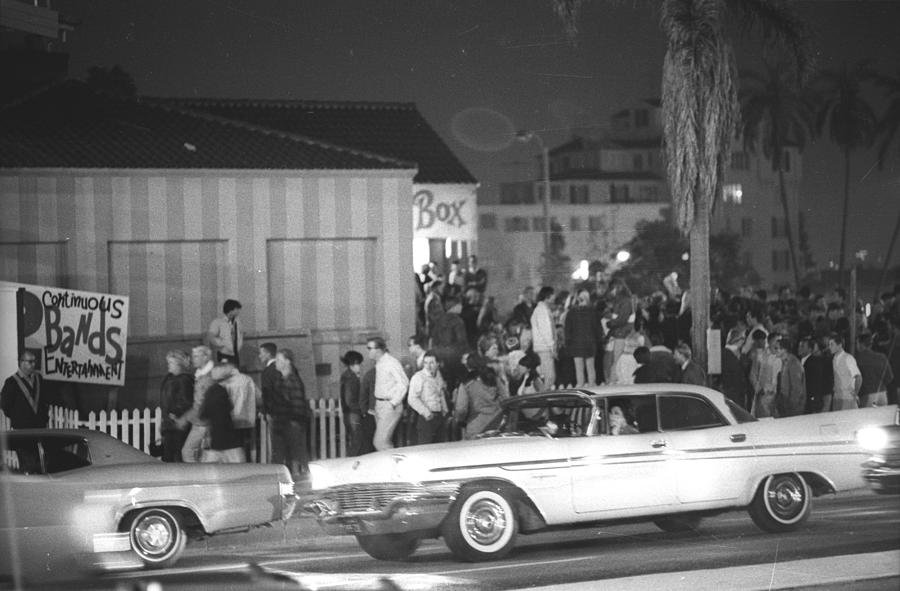
When we talk about the Sunset Strip curfew riots for what it's worth, we're not just recounting a dusty footnote in history. We're dissecting a foundational moment where youth culture, civil liberties, and civic authority clashed, leaving indelible marks that echo in our society's dynamics even today. This isn't just a story about a few unruly kids; it's a profound look at how seemingly minor local ordinances can ignite widespread social unrest and redefine cultural landscapes.
At a glance
- Uncover the true catalysts: Understand how specific urban policies and licensing changes fueled public outrage among young people.
- Map the cultural ripple effect: See how these local clashes anticipated the broader "culture wars" and inspired iconic music and film.
- Decipher "for what it's worth": Grasp the lasting significance of these riots on civil rights, youth advocacy, and police-community relations.
- Extract actionable lessons: Learn how historical flashpoints offer frameworks for navigating similar tensions between authorities and emergent social movements today.
- Recognize early warning signs: Identify the conditions that can escalate local disputes into widespread sociopolitical phenomena.
More Than Just a Curfew: The Genesis of the Sunset Strip Clashes
In the mid-1960s, Los Angeles's Sunset Strip wasn't just a thoroughfare; it was the vibrant, beating heart of a burgeoning youth and rock 'n' roll counterculture. Clubs like Pandora's Box, The Whisky a Go Go, and Gazzarri's pulsed with energy, drawing young people, musicians, and nascent movements. This was a place where identities were forged, and new ideas were exchanged, often late into the night.
However, this cultural explosion began to chafe against established norms. Local business owners and residents grew increasingly concerned about traffic congestion, noise, and the general "nuisance" associated with the burgeoning counterculture. Their complaints reached the Los Angeles City Council, which responded with a series of restrictive measures. These included strict 10 p.m. nightly curfews and loitering laws, aimed directly at curtailing the very activities that defined the Strip's youthful appeal. Adding fuel to the fire, a 1965 tiered licensing system further complicated matters, creating confusion and frustration by dictating which age groups (15-18 vs. 18-21) could frequent specific venues.
These laws, while framed as efforts to maintain public order, were widely perceived by young locals as a direct infringement on their civil rights and their freedom to gather and express themselves. The tension simmered, a quiet pressure building beneath the glittering surface of the Strip, waiting for a catalyst to erupt.
The Night the Strip Exploded: Key Events and Escalation
The breaking point arrived with the impending closure of Pandora's Box, a popular club that had become a symbol of youth freedom on the Strip. On November 12, 1966, word spread like wildfire through flyers and rock 'n' roll radio stations: a rally was planned at Pandora's Box, at the iconic corner of Sunset Boulevard and Crescent Heights.
That evening, as many as 1,000 young demonstrators converged, their voices rising against the perceived repressive enforcement of the new curfew laws. Among them were celebrities like Jack Nicholson and Peter Fonda, the latter of whom was famously handcuffed by police, lending a high-profile validation to the protesters' cause. The scene was chaotic: protests continued into the next night and sporadically throughout November and December, drawing thousands of participants, including one November 1966 protest with over 3,000 people.
The authorities responded with force. Police shut down several streets, called in the California Highway Patrol, and even brought in the private security firm Pinkerton. Violent arrests became common, often targeting "longhaired kids" and perceived "counter-culture establishments" like art galleries and gay bars. Critics at the time voiced concerns that police behavior frequently "went way beyond their rights and responsibility." In a decisive move, the Los Angeles City Council voted to acquire and demolish Pandora's Box, a destruction that ultimately occurred in early August 1967, effectively erasing a physical landmark of the burgeoning youth movement. This confrontation laid bare the growing chasm between generations and between civic authority and the burgeoning counterculture.
Echoes in the Culture: Music, Film, and the "Culture Wars"
The Sunset Strip curfew riots were far more than a localized skirmish; they were an early, palpable tremor in the broader seismic shift that would define the era. Recognized as an "early salvo in the 'culture wars'," these events represented a huge inflection point, signaling a profound reorientation of American society. The clashes crystallized the burgeoning divide between the establishment and the youth, traditional values and countercultural aspirations.
This cultural rift quickly seeped into the era's artistic output, becoming a powerful muse for musicians and filmmakers alike. The most iconic musical response, of course, was Buffalo Springfield's "For What It's Worth." Stephen Stills, deeply affected by the events, famously described the song as "a funeral for Pandora's Box," capturing the lament and the urgent questioning of authority that defined the protests. But it wasn't alone. The Monkees' "Daily Nightly," The Standells' "Riot on Sunset Strip," and The Mamas and the Papas' "Safe in My Garden" all directly referenced the unrest or the feelings it engendered. Joni Mitchell's "California" contained the poignant line "I'll even kiss a Sunset pig" (a slang term for a policeman), reflecting the complex emotions surrounding the conflict. Even Frank Zappa and the Mothers of Invention, with "Plastic People" from their 1967 album "Absolutely Free," critiqued the conformity and the oppressive forces at play around Pandora's Box.
Beyond music, the riots provided the direct basis for the 1967 low-budget teen exploitation film "Riot on Sunset Strip," demonstrating how quickly the cultural narrative could be monetized and disseminated. These artistic expressions weren't just reactions; they were instruments shaping public perception, solidifying the riots' place in the collective consciousness as a pivotal moment where youth found its voice against an unyielding establishment. For a deeper understanding of how these specific events fit into the wider tapestry of social movements and their lasting influence, you might want to Explore historical and sociopolitical context, which can illuminate how local actions often become integral threads in the grander narrative of societal transformation.
"For What It's Worth": Why These Riots Still Resonate
The phrase "for what it's worth" often precedes an opinion or a piece of information offered cautiously, suggesting its value might be debatable. Yet, in the context of the Sunset Strip curfew riots, its worth isn't debatable at all; it's profoundly significant. The riots provided critical insights into the dynamics of youth movements, civil liberties, police power, and the mechanisms of cultural change.
Firstly, they underscored the emerging power of collective youth action. This wasn't just a handful of individuals; it was thousands, mobilized by shared grievances and a burgeoning sense of identity. This event proved that young people, often dismissed as apolitical or naive, could be a potent force for social change, pushing back against what they perceived as arbitrary authority.
Secondly, the riots highlighted fundamental questions about civil liberties—specifically, the rights to assembly and expression. The imposition of curfews and loitering laws, coupled with aggressive police enforcement, brought into sharp focus the tension between public order and individual freedoms. It forced a public discussion, however contentious, about the limits of governmental power when it intersects with personal liberties, particularly for a demographic often denied full adult rights.
Lastly, the aggressive response by law enforcement, characterized by widespread arrests and perceived overreach, served as an early warning regarding police-community relations. The targeting of "longhaired kids" and specific countercultural venues illustrated how biases could shape enforcement, leading to further alienation and distrust between authorities and segments of the population. This dynamic would play out repeatedly in subsequent years, making the Sunset Strip a critical precursor to later, larger confrontations.
A Modern Lens: Applying Lessons from 1966
Understanding the Sunset Strip curfew riots isn't merely an academic exercise; it offers tangible lessons for navigating similar societal frictions today. The core tension—between evolving social norms, the desire for expression, and the need for public order—remains a constant.
Recognizing Early Warning Signs of Societal Friction
The riots didn't happen overnight. They were a culmination of increasing local complaints, specific policy changes (curfews, licensing), and a growing sense of disenfranchisement among youth.
- Case Snippet: A city council introduces a new noise ordinance aimed at "unruly gatherings" in a gentrifying neighborhood. If this ordinance disproportionately affects established community gathering spots or cultural venues and is enforced aggressively, it mirrors the Pandora's Box scenario. The "nuisance" framing often masks deeper cultural anxieties.
- Actionable Insight: Pay attention when local regulations begin to target specific demographics or cultural expressions. Often, seemingly benign "quality of life" laws can become flashpoints if perceived as repressive or discriminatory.
The Power of Policy and Perception
The laws themselves were one thing; their perceived intent and aggressive enforcement were another. Young people felt their rights were being infringed, turning policy disputes into a fight for civil liberties.
- Example: Imagine a school district imposing strict dress codes that disproportionately impact students of certain cultural backgrounds. While intended for "order," the perception of targeting can quickly lead to protests, mirroring the sentiment of the Sunset Strip youth.
- Actionable Insight: When drafting or enforcing policies, consider not just the letter of the law but also its spirit and how it will be perceived by affected communities. Transparency, dialogue, and clear communication can prevent misinterpretations from escalating into outright conflict.
Engaging Youth Voices vs. Imposing Authority
The authorities' response on the Strip was largely top-down and forceful. Had there been avenues for dialogue or compromise, the outcome might have been different.
- Scenario: A town experiences an increase in youth gatherings that some residents deem disruptive. Instead of immediately imposing curfews, the local government could establish a youth council or community forum. This platform allows young people to voice their needs for safe gathering spaces, potentially leading to collaborative solutions like designated youth centers or sanctioned events.
- Actionable Insight: Proactive engagement and creating channels for genuine youth input can transform potential adversaries into partners. Ignoring or dismissing youth perspectives often leads to a hardening of positions on both sides.
When Local Becomes National
The Sunset Strip riots, a local dispute, quickly garnered national attention due to celebrity involvement and media coverage, becoming a symbol for broader cultural struggles.
- Analogy: Think of a local environmental protest against a pipeline. Initially local, if key figures or dramatic confrontations occur, it can quickly become a national story, symbolizing larger debates about climate change, indigenous rights, or corporate power.
- Actionable Insight: Local incidents with significant public resonance, particularly those involving clashes between authority and marginalized groups, have the potential to transcend their geographical boundaries and become emblematic of wider societal trends. Stakeholders should be prepared for this broader scrutiny and narrative framing.
Practical Playbook for Navigating Community Tensions
For community leaders, policymakers, law enforcement, and even youth organizers, the Sunset Strip curfew riots offer a crucial playbook on what to do—and what to avoid—when community tensions simmer.
| Stakeholder Group | Avoid This Pitfall | Implement This Strategy |
|---|---|---|
| Local Authorities | Imposing unilateral, restrictive policies. | Collaborative Policy Development: Engage affected groups in creating solutions. |
| Dismissing concerns of specific demographics. | Empathetic Listening Forums: Create formal and informal channels for dialogue. | |
| Escalating force as a first resort. | De-escalation Training & Community Policing: Prioritize dialogue and understanding. | |
| Law Enforcement | Profiling or targeting specific subcultures. | Bias-Free Enforcement & Transparency: Apply laws consistently and explain actions clearly. |
| Overlapping private security with public police. | Clear Lines of Authority: Ensure public accountability in all enforcement actions. | |
| Business Owners/Residents | Demanding punitive measures without considering root causes. | Community-Wide Solutions: Advocate for holistic approaches that address youth needs, not just suppression. |
| Demonizing specific groups or lifestyles. | Intergenerational Dialogue: Foster understanding between different community segments. | |
| Youth/Activists | Relying solely on confrontational tactics. | Strategic Advocacy & Coalition Building: Combine protest with clear demands and alliances. |
| Lacking clear communication or leadership. | Organized Messaging & Designated Spokespersons: Ensure a coherent, powerful voice. |
Your Burning Questions About the Sunset Strip Riots, Answered
Q: Were the Sunset Strip riots truly about a curfew, or was there more to it?
A: While the 10 p.m. curfew and loitering laws were the immediate catalysts, the riots were fundamentally about much more. They represented a clash of values, generational divides, and differing ideas about civil liberties, youth expression, and public order. The laws simply brought these underlying tensions to a boiling point.
Q: Why is Pandora's Box so central to the narrative?
A: Pandora's Box became a potent symbol because it was a popular gathering spot for the counterculture. Its forced closure and eventual demolition were seen as a direct attack on youth culture and a physical manifestation of the establishment's desire to erase their presence from the Strip. Its fate galvanized support and became a rallying cry.
Q: Did the riots achieve anything concrete at the time?
A: While the immediate goal of stopping the curfews wasn't fully achieved (and Pandora's Box was demolished), the riots achieved significant cultural and social impacts. They drew national attention to youth grievances, inspired iconic music, and forced a societal conversation about civil rights and police conduct. They were a crucial early step in the broader counterculture movement.
Q: How did celebrities like Peter Fonda get involved?
A: Celebrities often frequented the Strip and were part of or sympathetic to the counterculture movement. Their presence, and in Fonda's case, his arrest, amplified media attention and lent legitimacy to the protesters' cause, underscoring that the discontent wasn't limited to a fringe element.
Q: Are there parallels between these riots and modern youth protests?
A: Absolutely. The core dynamics remain strikingly similar: youth pushing for self-expression and civil liberties, authorities attempting to maintain order, and the potential for local issues to resonate on a national stage. Modern movements often use different tools (social media vs. flyers) but share the same fundamental struggle for recognition and rights.
Beyond the Pavement: What the Sunset Strip Saga Teaches Us
The Sunset Strip curfew riots for what it's worth offer a timeless lesson: societal foundations are constantly shifting beneath our feet. What was once a local dispute over curfews and loitering quickly became a flashpoint that illuminated deep fissures in American society, predicting the cultural and political battles that would define the era.
For anyone navigating community development, policy-making, or social activism today, the takeaway is clear: dismiss grievances, especially those from marginalized or emerging groups, at your peril. Seemingly minor regulations can ignite major movements when they touch upon deeper questions of identity, freedom, and fairness. Instead, cultivate open channels for dialogue, seek collaborative solutions, and recognize the inherent value in diverse cultural expressions. The lessons from 1966 remind us that true progress often comes not from suppressing dissent, but from understanding and integrating the voices that challenge the status quo.